Lacanian Diagnostic Structures and Clinical Technique
An Online Seminar
Jason Childs and Derek Hook
August—December 2026
Applications Open
Applications for this year’s seminar have now closed. However, applications are already open for the 2027 seminar, which will be delivered via The Analytic Forum.
The Lacanian clinical domain is well known for its three basic diagnostic structures (neurosis, psychosis, perversion). To some practitioners, this system appears esoteric, requiring familiarity with Lacan’s broader body of thought and seeming to partake of an entirely different nosological ‘language game’ than the DSM and its international counterparts. To others, it appears confusingly minimal, with its apparent exclusion or demotion of diagnostic factors in high circulation in most of today’s psychotherapeutic vocabularies, such as narcissism, depression, and borderline pathology. Even for the curious, the learning curve can appear dauntingly steep.
Yet the rewards of coming to grips with this approach to diagnosis are immense, opening up clinical perspectives and possibilities for effective intervention that are available in no other clinical orientation today.
This seminar will offer clinicians and trainees a unique opportunity to move beyond an ‘introductory’ or schematic comprehension of Lacanian diagnosis and toward actually implementing it in their work.
This course will present Lacanian diagnostic categories not as ‘objectifying’ designations, à la the DSM, but as subjective structures, each of which relies upon a distinct mode of defense (repression, foreclosure, disavowal) that are evident in the anaylsand’s speech and transference. These subjective structures will become the foundation for case formulation and the development of relevant clinical strategy and technique.
The seminar will introduce and develop a series of key Lacanian/Freudian concepts—desire, jouissance, the Name-of-the-Father, the three registers (Imaginary/Symbolic/Real), objet a, and phallus, among others—as a way both of differentiating subjective structures and highlighting which Lacanian techniques and interventions (punctuation, scansion, ‘hystericization’, oracular and ‘non-meaningful’ interpretation, ‘secretarial work’, and so on) are indicated in working with them.
The seminar will be divided into four main modules, each running for five weeks and focused respectively on hysteria, obsession, perversion, and psychosis. Individual sessions, taught alternately by Derek Hook and Jason Childs, will involve sustained, accessible discussion of theoretical questions and detailed explorations of clinical literature, including Freud’s major case studies and contemporary Lacanian case studies. The concluding week of each module will consist of a workshop, led jointly by Hook and Childs, focused on clinical material provided by the participants or, where this is not available, by the instructors.
Overview
This seminar will consist of 18 sessions in total. All sessions will run for approximately 90 minutes on Saturdays at 4pm Paris time (10am New York / 3pm London / 7am Los Angeles / 5pm Beirut / 12am Sydney).
Orientation/Overview (August 15)
Module 1: Obsession (August 22, 29; September 5,12)
Module 2: Hysteria (September 26; October 3, 10, 17)
Module 3: Psychosis (October 24, 31; November 7, 14)
Module 4: Perversion (November 21, 28; December 5, 12)
Conclusion (December 19)
Programme and Dates
Participation in this seminar is by application. While the programme is intended primarily for clinicians and clinical trainees, applications are welcome from non-clinicians with a strong interest in Lacanian psychoanalysis.
Applications will close on July 30, 2026. The deadline for applications has been extended to August 12, 2026
Each session will consist of a lecture and group discussion facilitated by the instructors. Discussion will focus on the lecture and on relevant prescribed readings. It is important that participants engage deeply with the readings and arrive ready to talk about them.
Recordings of the lecture portion of each session will be made available to participants for the duration of the course, but the group discussions will not be recorded. Attendance at all sessions is strongly encouraged.
Further Information
Successful applicants to this seminar will be charged a fee of 1200 euros.
This can be paid in six monthly installments of 200 euros, the first of which will be paid on acceptance to the seminar.
Successful applicants who pay the fee upfront as a lump sum will receive a discount of 200 euros (i.e. they will pay 1000 euros total).
Participation Fees
Instructors
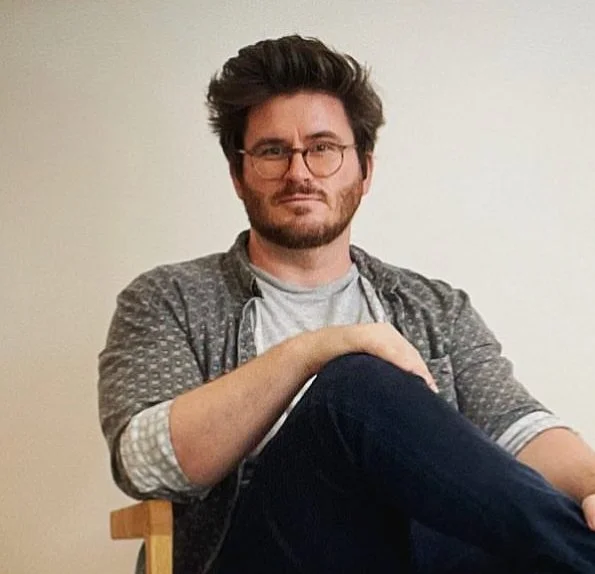
Jason Childs is a Lacanian psychoanalyst based in France, working in private practice both locally and internationally. He began his career in academia, as a literary theorist, where he published work on the relationship between philosophy and literature. Childs trained as a psychotherapist at Deakin University in Melbourne, and undertook his analytic formation via studies at the Centre for Freudian Analysis and Research, the Lacan Circle of Australia, and other international Lacanian organisations. He is a psychoanalytic faculty member at the Global Centre for Advanced Studies and the Blanton-Peale Institute. He is the author of two forthcoming books: On Not Fitting In: Psychoanalytic Rem(a)inders (Routledge 2026) and Drive: Theory and Clinic After Freud and Lacan (Palgrave 2026).